How does solvent distillation work?
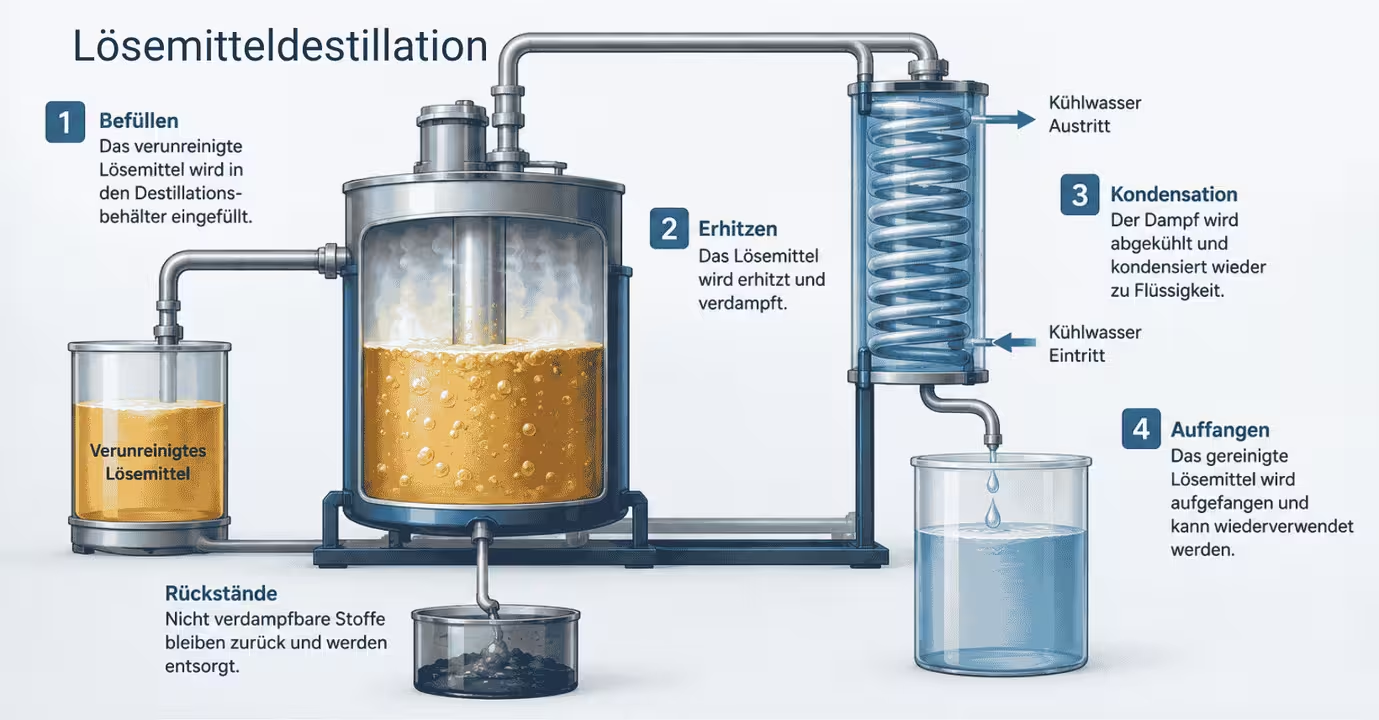
The figure illustrates the solvent distillation process with labeled individual steps: loading, heating, condensation, and collection. A contaminated solvent is heated in the distillation vessel, vaporized, and then condensed back into a liquid in a cooling system. Non-volatile residues remain behind, while the purified solvent is collected and reused.
Processes, Advantages, and Industrial Applications
Solvent distillation is a proven process for the treatment, purification, and recovery of solvents. In numerous industries (e.g., the chemical industry, paint and coating production, and packaging printing), it plays a crucial role in lowering operating costs and reducing waste volumes. But how exactly does solvent distillation work, and what benefits does it offer companies?
What is solvent distillation?
Solvent distillation refers to the separation of a solvent from impurities or dissolved substances it contains through evaporation and subsequent condensation. The process takes advantage of the different boiling points of the substances present.
As the solvent evaporates at a specified temperature, non-volatile impurities, resins, paint residues, oils, or solids remain in the distillation vessel. The resulting vapor is then cooled and liquefied again as purified solvent.
The result: a high-quality, reprocessed solvent that can be reused in the production process.
The Process of Solvent Distillation
The process of industrial solvent distillation can be broken down into four steps:
1. Filling the distillation unit
The contaminated solvent is poured into the distillation kettle. Depending on the application, it may be:
- Acetone
- Ethyl acetate
- Isopropanol (IPA)
- Methyl ethyl ketone (MEK)
- Thinner
- Detergents and Cleaning Products
trade. However, numerous other solvents are also possible.
2. Heating the Solvent
The distillation vessel is heated to the required temperature. As a result, the solvent evaporates due to its lower boiling point.
Modern systems often operate under vacuum, which allows the boiling point to be lowered. This protects the product and reduces energy consumption.
3. Condensation of the steam
The solvent vapor is passed through a condenser, where it is cooled. The vapor condenses back into a liquid and is collected as a purified distillate.
4. Disposal or Further Processing of Residues
The residues that have not evaporated remain in the distillation kettle. These are drained into a separate container and must be disposed of properly.
What are the advantages of solvent distillation?
Solvent recovery offers companies numerous economic and environmental benefits.
Cost Reduction
Reusing recycled solvents significantly reduces the need for new solvents. This is a decisive advantage in times of rising raw material prices caused by numerous global crises. At the same time, disposal costs are reduced.
Conservation of resources
Recycling solvents conserves valuable raw materials and supports sustainable production processes.
Less waste
Instead of disposing of large quantities of contaminated solvents, only the remaining residues are treated or disposed of.
Greater process reliability
Consistently high solvent quality contributes to stable production conditions and reproducible results.
Contribution to Environmental Protection
Reducing solvent waste and lowering raw material consumption make an important contribution to sustainability and compliance with environmental regulations.
Where is solvent distillation used?
The areas of application are diverse. The process is used particularly frequently in the following industries:
- Paint and Coatings Industry
- Printing Companies
- Automotive Industry
- Plastics Processing
- Chemical Industry
- Electronics Manufacturing
- Metalworking
- Surface Technology
Wherever solvents are used for cleaning, degreasing, or production processes, cost-effective recovery may be a viable option.
Modern Solvent Distillation Plants
Modern distillation plants are characterized by high energy efficiency, automated processes, and maximum safety. Vacuum distillation plants, in particular, enable the gentle processing of temperature-sensitive solvents.
For decades, manufacturers such as Renzmann have been developing innovative solutions for industrial solvent recovery. The systems are specifically designed to meet the needs of printing shops, paint shops, and industrial companies, and support a sustainable circular economy.
Conclusion: How does solvent distillation work?
Solvent distillation is an efficient process for separating and recovering solvents. Through evaporation, condensation, and reuse, it is possible to lower costs, conserve resources, and reduce environmental impact.
For companies that regularly use solvent-based processes, investing in modern distillation technology offers significant economic and environmental benefits. At the same time, it helps them meet regulatory requirements and produce more sustainably.
Would you like to learn more about industrial solvent distillation and modern recovery systems? Find out about Renzmann’s solutions and discover the possibilities of efficient solvent treatment for your company. Distillation trials can also be conducted at our in-house technical center in Monzingen. Please feel free to contact us.
Press contact:
Renzmann GmbH
Marketing & Communication Rebecca Wilhelm
E-Mail: wilhelm@dw-renzmann.de
Phone: +49 (0)6751 / 878-290